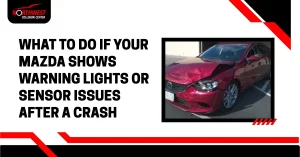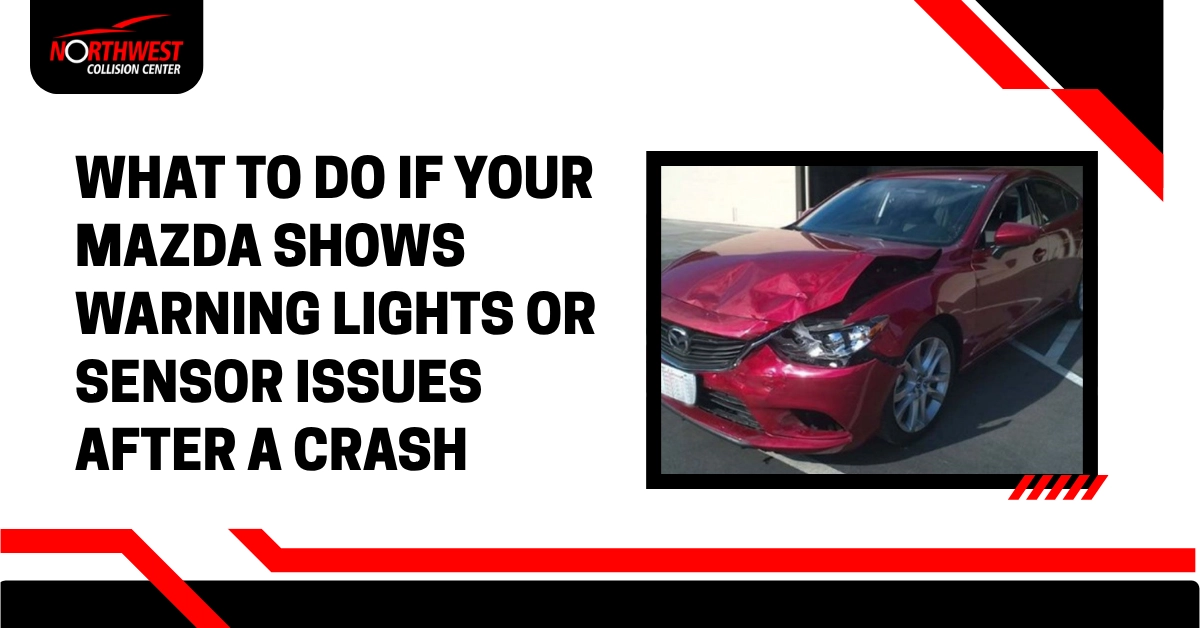
Warning lights, disabled safety features, or unusual sensor alerts after a Mazda crash can indicate that the damage goes beyond what you can see. During Mazda collision repair in St. Petersburg, the visible panels are only one part of the repair. The sensors, wiring, brackets, and safety-related systems may need attention too. A bumper, grille, mirror, windshield, or rear panel can affect the sensors that help your Mazda monitor traffic, lane position, braking distance, and nearby objects. At Northwest Collision Center, we repair Mazda vehicles with the entire vehicle in mind. This includes the body, structure, finish, electronics, and other systems that may be affected after a crash.
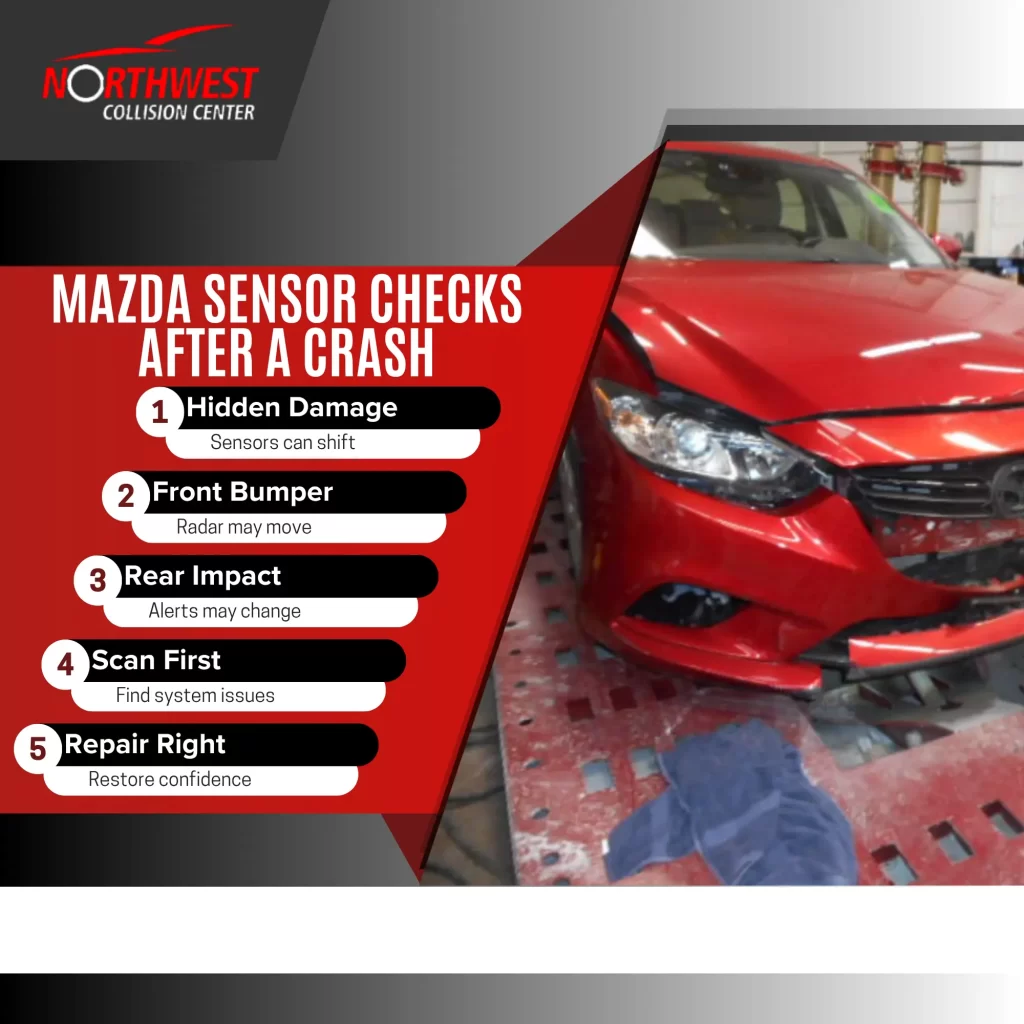
Why Mazda Warning Lights After a Crash Need More Than a Reset
Modern Mazda vehicles use cameras, radar, and sensors to support driver awareness. After an accident, those parts may need inspection before your vehicle is ready for daily driving again.
Hidden Damage Can Affect More Than the Body
A minor front-end hit near Tyrone Boulevard or a parking lot bump near a shopping center may not look severe. Still, the force can shift a bumper bracket, grille area, mirror housing, or rear sensor mount. That shift may change how the vehicle reads the road. A clean-looking repair can still leave a camera or sensor out of position. Mazda safety sensor calibration helps confirm that the system has the correct view after repair work.
Local Driving Conditions Make Accuracy Important
St. Petersburg drivers deal with sudden rain, strong sun glare, tight parking areas, and busy routes like US-19 and I-275. Safety systems need clear, accurate readings in those conditions. If a sensor is blocked, misaligned, or affected by crash damage, your Mazda may show warning messages or behave differently than it did before the accident.
What Mazda Safety Sensors Do After a Collision
Mazda safety systems are designed to support the driver. They may help with alerts, braking support, lane guidance, blind spot monitoring, and parking awareness, depending on your model and trim.
Front Cameras and Radar Sensors
Front cameras and radar sensors may sit near the windshield, grille, bumper, or emblem area. If the front of the vehicle was repaired, replaced, painted, or adjusted, those systems may need to be checked. For deeper collision work, our auto body repair services help address damaged panels, structural areas, and related components.
Blind Spot and Rear Warning Systems
Rear and side impacts can affect blind spot monitoring and rear warning systems. These sensors are often hidden behind bumper covers or trim pieces, so damage may not be obvious at first glance. This is one reason Mazda accident repair should include a careful teardown and inspection. What looks like a simple bumper repair may involve clips, brackets, wiring, or sensor positions underneath.
Parking Sensors and Bumper Repairs
Parking sensors help when backing into tight spaces, pulling into garages, or parking near busy areas around St. Petersburg. If a bumper cover is replaced or repaired, those sensors need to sit correctly. Mazda auto body repair in St. Petersburg should restore more than the way your vehicle looks. The repair should also account for sensors, wiring, brackets, and safety features that may be affected behind the bumper.
How Mazda Accident Repair Connects to Sensor Calibration
Safety sensor calibration depends on the repair foundation. If body alignment, bumper fit, or structural measurements are off, calibration may not give reliable results.
Body Alignment Matters
A Mazda’s sensors depend on proper vehicle geometry. Frame movement, suspension damage, uneven panel fit, or incorrect bumper placement can all affect sensor readings. For more serious impacts, frame straightening may be part of restoring the vehicle before sensor-related checks are completed.
Scans Help Find System Concerns
Warning lights are helpful, but they do not tell the full story. A professional scan can reveal stored codes, communication issues, and system concerns linked to the collision. At Northwest Collision Center, we use repair planning and documentation to help explain what your Mazda needs and why. That gives you a clearer path from estimate to completed repair.
Choosing a Mazda Collision Center That Understands Modern Repairs
Not every repair shop approaches Mazda collision work the same way. A modern repair should account for safety systems, materials, paint finish, fit, and documentation.
Mazda-Certified Repairs Support Vehicle Safety
A Mazda collision center should understand how repair steps affect the whole vehicle, not just the damaged panel. As a Mazda-Certified Collision Center, Northwest Collision Center follows Mazda repair procedures to support safety, performance, and a factory-quality finish. For St. Petersburg and Pinellas County drivers, that matters after a crash because sensors, body structure, brackets, and electronics can all be part of the repair. You can learn more about our Mazda auto body repair services.
Documentation Helps You Understand the Work
Good repair documentation helps you see what was inspected, repaired, replaced, refinished, or calibrated. It can also help if insurance questions come up during the claim process. If another shop already repaired your Mazda and something does not feel right, you can request a post-repair inspection to review visible repair quality and potential concerns. For finish-related repairs, our digital color matching helps restore the look of repaired panels while supporting a cleaner final result.
Takeaways
Mazda collision work should go deeper than the visible damage. Sensors, cameras, radar, alignment, bumper fit, and repair documentation can all affect how your vehicle performs after an accident. A careful repair process helps restore your Mazda’s safety, appearance, and confidence on the road. If your vehicle was recently hit, Northwest Collision Center can help you understand the right next step.
FAQs About Mazda Safety Sensor Calibration
What is Mazda safety sensor calibration?
Mazda safety sensor calibration is the process of checking and setting cameras, radar, or sensors so they read the road and nearby vehicles correctly. It may be needed after collision repair, bumper work, windshield replacement, alignment changes, or sensor replacement.
Does every Mazda accident require sensor calibration?
Not every accident requires the same repair steps, but many Mazda crashes should be followed by sensor checks. Front, rear, side, windshield, suspension, and bumper damage can all affect safety-related systems.
Can my Mazda look repaired but still have sensor issues?
Yes, your Mazda may look repaired but still have sensor issues. A bumper or fender may look straight while a sensor bracket, camera angle, or wiring connection is still affected. That is why inspection and scanning are important after Mazda accident repair.
What warning signs should I watch for after repair?
After a repair, look for dashboard warnings, disabled safety features, odd alerts, blind spot issues, lane warning changes, or parking sensor problems. If the vehicle feels different than it did before the accident, have it checked.
Where can I get Mazda auto body repair in St. Petersburg?
Northwest Collision Center provides Mazda collision and body repair support in St. Petersburg, FL. Our team can inspect the damage, explain the repair plan, and help you understand whether safety sensor calibration may be part of the process.
Restore Your Mazda With Collision Repair in St. Petersburg
Northwest Collision Center helps Mazda owners address visible damage, sensor concerns, and safety-related repair needs after an accident. If your Mazda has warning lights, bumper damage, parking sensor issues, or other collision damage, our team can inspect the vehicle. We will also explain the repair plan clearly. Visit us at 3301 Tyrone Blvd. N. St. Petersburg, FL 33710 or call 727-347-8945 to request an estimate.