A tiny chip on your hood or bumper can look harmless at first. Then the Florida sun, rain, salt air, and daily driving start working on it. Drivers considering rock chip repair in St. Petersburg, FL, should act before the damage gets worse. Early repair can help prevent the chip from growing, flaking, or exposing more of the panel. At Northwest Collision Center, our auto paint and collision repair team helps local drivers deal with small paint damage before it turns into a larger repair. If you are already comparing touch-up, refinishing, or auto paint repair in St. Petersburg, FL, this guide will help you understand what your vehicle may need.
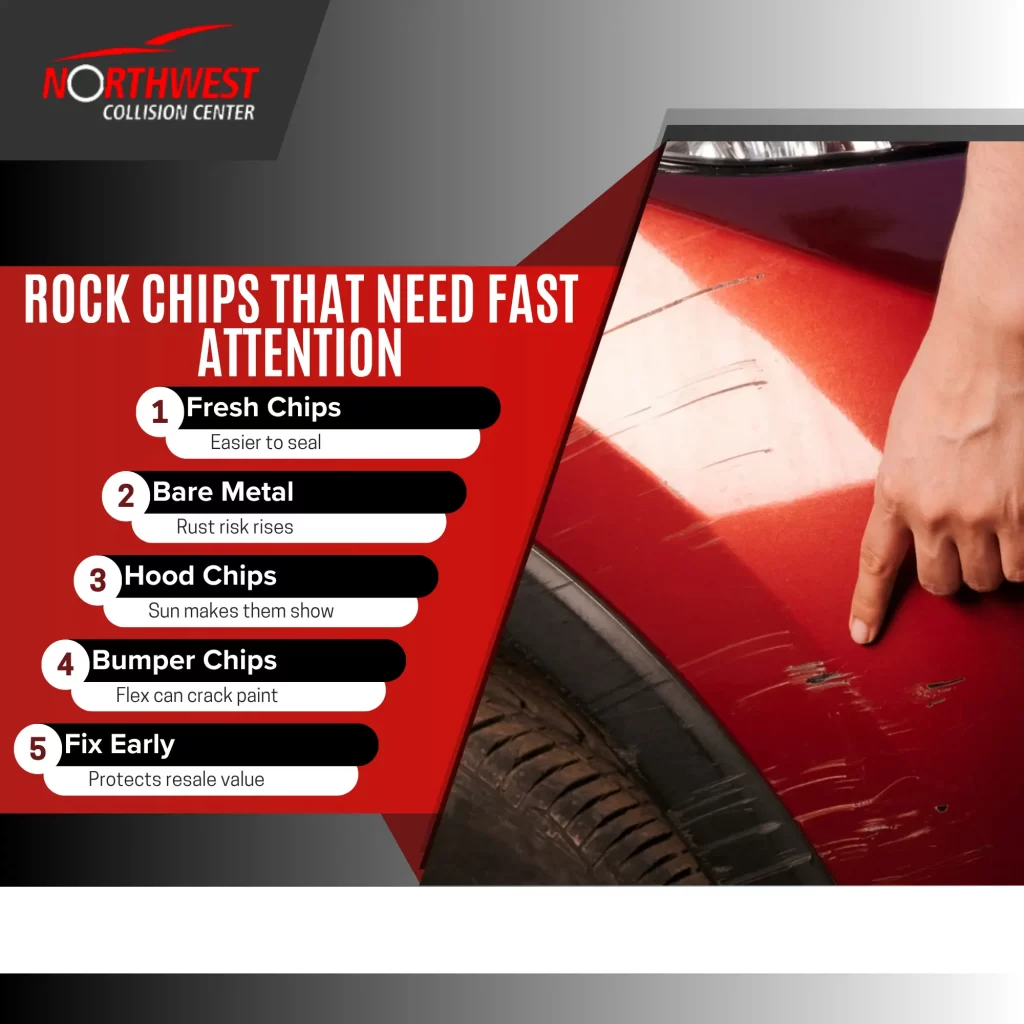
Why St. Petersburg Drivers Should Fix Rock Chips Early
Rock chips often start small, but they create a break in the protective layers over your vehicle. Once that layer is open, moisture, heat, and road grit can begin to widen the damage.
Small Chips Can Expose More Than Paint
Your vehicle’s finish is made of layers. Clear coat protects the color. The color coat gives the panel its look. Primer and metal or plastic sit underneath. When a stone chip cuts through the top layers, it may leave the surface open to staining, corrosion, or peeling. On a hood, exposed metal is the biggest concern. On a bumper, the issue is often cracking paint, loose edges, or spreading damage around a flexible plastic cover.
Hood and Bumper Chips Spread Differently
Hood paint chips usually come from road debris thrown by vehicles ahead of you. A small nick can sit directly in the sun every day, especially if your car is parked outside near Tyrone Boulevard, Central Ave, or the Gulf beaches. A bumper paint chip repair may need a different approach. Bumpers flex when you park, tap a curb, or get bumped in traffic. If the paint edge is already cracked, that movement can make the damage widen.
What Causes Rock Chips on Local Roads
Local driving patterns play a real role in how paint chips happen. A daily commute, a beach run, or a short drive through a busy shopping center can all leave marks over time.
Highway Gravel and Daily Traffic
Small stones, sand, and road grit can bounce up on I-275, US-19, and other Pinellas County roads. The faster traffic moves, the harder those small pieces can hit your hood, front bumper, mirrors, and lower panels. Fresh chips often look like tiny white dots, dark specks, or pin-sized craters. If you notice several new marks after highway driving, schedule an inspection before washing, waxing, or polishing over the area.
Coastal Weather and Florida Sun
St. Petersburg weather is tough on paint. Heat can make a clear coat brittle over time, while sudden storms push moisture into small openings. Salt air near the water can also accelerate surface corrosion when metal is exposed. That is why car paint chip repair is not only about looks. It also helps protect the panel underneath.
Parking Lots and Bumper Contact
Tight parking areas near grocery stores, beach access points, restaurants, and medical offices can be rough on bumpers. A small scrape from another bumper or shopping cart can leave chipped paint along the corner or lower edge. If the bumper cover is loose, cracked, or misaligned, the issue may go beyond paint. A quick inspection can show whether the chip is cosmetic or tied to deeper damage.
How Professional Paint Chip Repair Protects Your Vehicle
The right repair depends on the depth, size, and location of the chip. Northwest Collision Center looks at the full area, not just the mark you noticed first.
Cleaning and Damage Inspection
A chip should be cleaned before anyone decides how to repair it. Dirt, wax, road film, and loose paint can hide the true edge of the damage. A technician checks whether the chip is limited to a clear coat, reaches the color layer, or exposes primer, metal, or plastic. That inspection helps avoid a weak repair that looks fine for a few weeks and then starts peeling again.
Touch-Up, Blending, or Refinishing
Some small chips may be good candidates for touch-up. Larger chips, grouped chips, or peeling edges may need blending or refinishing for a cleaner result. If you want to better understand how touch-up paint works, Northwest Collision Center also has a guide on understanding car touch-up paint. For deeper damage, a professional repair may include sanding, priming, sealing, color application, clear coat, and polishing.
Digital Color Matching for a Cleaner Finish
Paint fades over time, especially under the Florida sun. A paint code alone may not match how your car looks today. With digital color matching, the repair can be matched more closely to the current finish instead of relying on guesswork. This is especially helpful on hoods, bumpers, pearl finishes, metallic colors, and panels that catch light from multiple angles.
When a Rock Chip Needs More Than Touch-Up Paint
Some chips are too deep or too widespread for a simple dab of paint. A professional look can save you from spending time on a quick fix that will not hold.
Bare Metal or Primer Is Showing
If you see silver metal, dark primer, or rust-colored staining, do not ignore it. The area needs proper cleaning and sealing before color is applied. Hood paint chips that expose metal can worsen faster in humid coastal conditions.
Paint Is Cracking Around the Chip
Cracked paint around the chip often means the impact spreads beneath the surface. On a bumper, flexing can keep pulling at that cracked edge. That is when bumper paint chip repair may need refinishing instead of a small touch-up.
The Damage Sits Near Sensors or Trim
Modern bumpers may include parking sensors, radar covers, cameras, brackets, and trim pieces. If the chip is near these areas, the repair should be handled carefully. A shop that also understands auto body repair in St. Petersburg can check whether anything behind the cover was affected. Minor dents near a paint chip may also change the repair path. If the paint is still intact around a small dent, paintless dent repair in St. Petersburg may be worth discussing before repainting.
Takeaways
Rock chips on your hood and bumper are easy to overlook, but they can spread when Florida weather and daily driving work into the damaged paint. Fixing chips as soon as possible can help protect the finish, reduce the chance of corrosion, and keep your vehicle looking cared for. The best repair depends on the depth, location, and surrounding damage. A quick inspection can show whether you need touch-up, blending, refinishing, or another paint and body repair option.
Rock Chip Repair FAQs
Can I leave a small rock chip alone?
You can leave a small rock chip alone, but it may not stay small. Once the paint layer is open, heat, water, salt air, and washing can make the chip spread or peel.
Is touch-up paint enough for hood paint chips?
Touch-up paint can help with some small hood paint chips, especially when the damage is shallow. If the chip is deep, rusty, wide, or surrounded by cracked clear coat, professional prep and refinishing may give a better result.
Why do bumper chips come back after a quick repair?
Bumpers flex more than metal panels. If the surface is not cleaned, sanded, sealed, and refinished correctly, the repaired area can crack again when the bumper moves.
How soon should I fix rock chips after noticing them?
Sooner is better, especially in St. Petersburg’s humid, coastal climate. A fresh chip is usually easier to clean, seal, and repair than one that has collected moisture and grime for months.
Can rock chip repair improve resale value?
Yes, clean paint can help your vehicle make a better impression during resale or trade-in. Small chips across the hood and bumper can make a car look older than it is, even when it drives well.
Get Local Rock Chip Repair That Protects Your Paint
If your hood or bumper has fresh chips, peeling paint, or small impact marks, Northwest Collision Center can help you choose the right repair path. Our team can inspect the damage, explain whether touch-up or refinishing makes sense, and help protect your vehicle’s finish before the problem spreads. Visit us at 3301 Tyrone Blvd. N. St. Petersburg, FL 33710 or call 727-347-8945 to ask about rock chip repair in St. Petersburg, FL. You will get clear guidance, practical repair options, and local help from a collision center that works on vehicles exposed to the same roads, sun, rain, and coastal air you drive through every day.