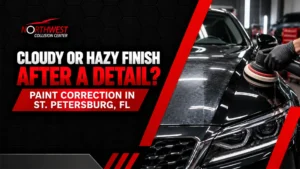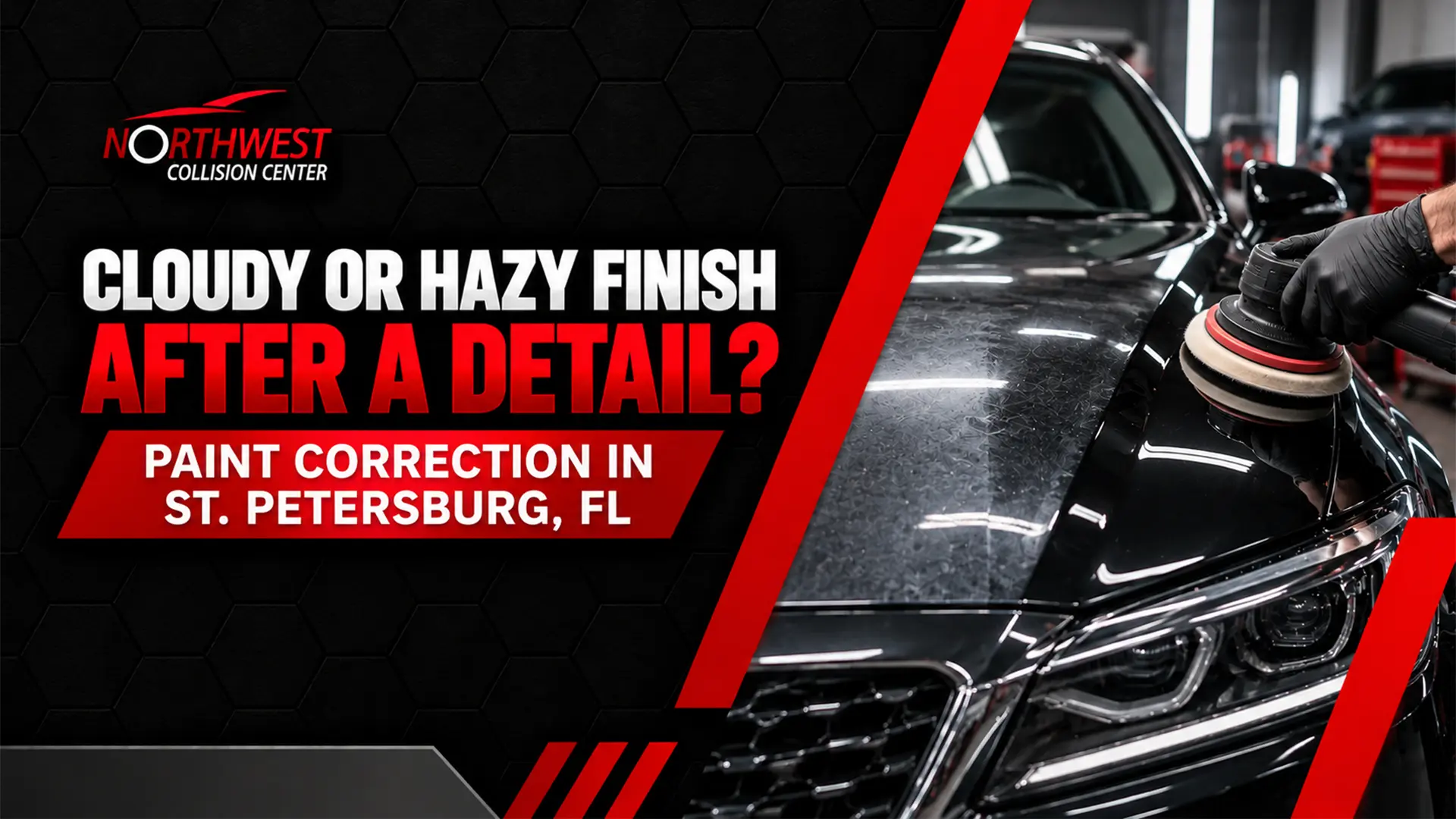
A cloudy finish after detailing often comes from leftover product, fine polishing marks, or defects already present in the clear coat. If you are considering paint correction in St. Petersburg, FL, the first step is identifying which layer is causing the haze. Northwest Collision Center offers auto detailing in St. Petersburg and can inspect the finish before recommending more polishing or paint work.
Why Car Paint Can Look Cloudy After Detailing
Cloudiness appears when light no longer reflects evenly from the paint surface. The cause may sit on top of the clear coat, within its upper surface, or below it.
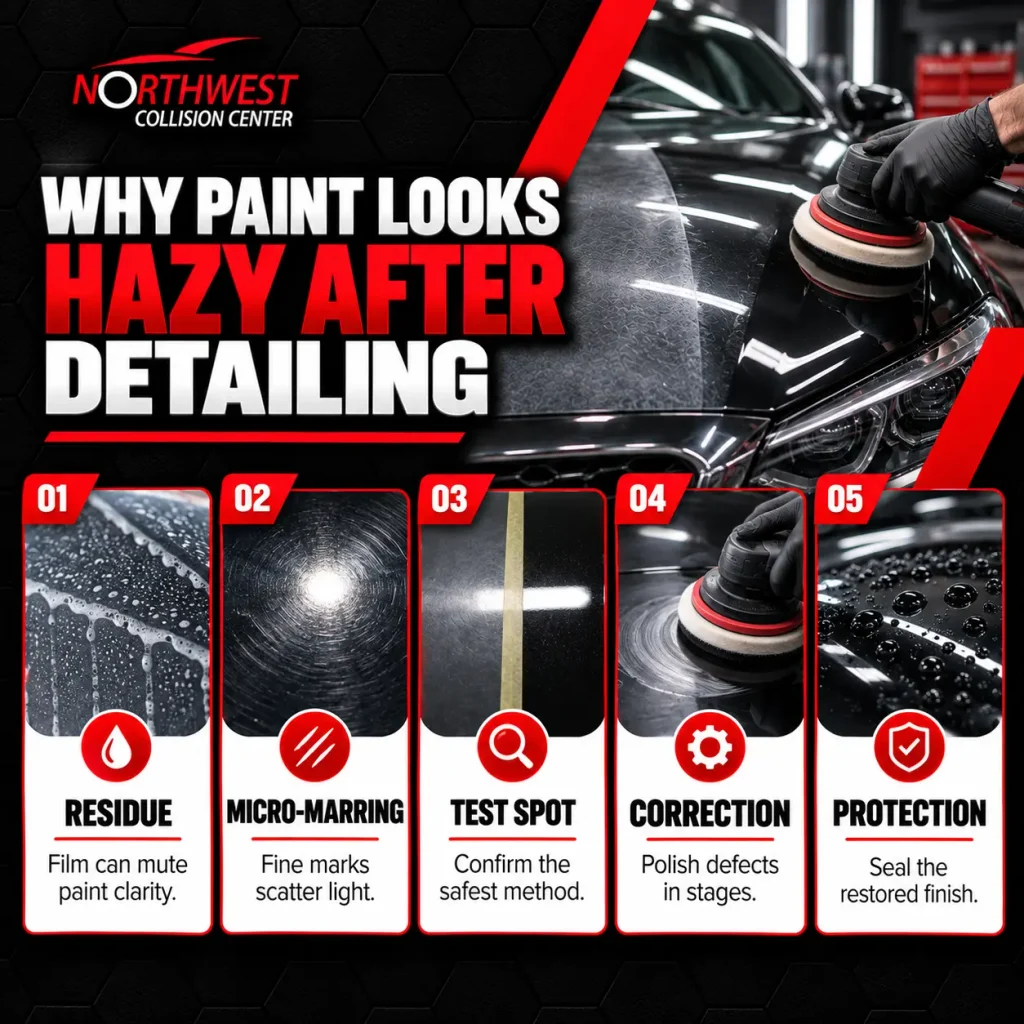
Product Residue or Uneven Removal
Wax, sealant, polish, or dressing can leave a film when too much product is used or removal is incomplete. Heat and humidity may also make some products harder to wipe clean. The result can look smeared, patchy, or cloudy under direct sunlight.
Before assuming the paint is damaged, wash one cool panel in the shade with a paint-safe shampoo. If the haze disappears, residue was likely part of the problem.
Micro-Marring and Polishing Holograms
Fine scratches can create a hazy car paint finish even when the surface feels smooth. These marks may come from an aggressive compound, a dirty pad, poor towel technique, or a polishing step that was not refined.
Circular swirls often show around a strong point of light. Holograms may look like curved trails that move as you walk around the vehicle. St. Petersburg’s bright sun can reveal both defects more clearly than garage lighting.
Existing Oxidation or Etching
A detail can clean the surface without fully removing oxidation, mineral spots, bird-dropping etching, or older wash scratches. Some products temporarily fill these defects. When the oils or fillers fade, the cloudiness may return.
Florida sun, salt air, sudden rain, and windblown grit can all wear on an exterior finish. Northwest Collision Center’s guide to how weather affects your car’s paint explains why coastal exposure makes steady paint care useful.
How to Tell Surface Haze From Clear Coat Failure
Surface haze may improve with cleaning or controlled polishing. Clear coat failure usually needs refinishing because the coating itself has separated, peeled, or broken down.
Signs the Haze May Be Correctable
Correctable defects often change when the panel is properly cleaned and viewed under several light sources. Light swirls, mild oxidation, shallow water spots, polishing haze, and patchy residue may respond to car paint correction.
A rough, clean surface may point to bonded contamination. A smooth surface with visible haze may point to fine defects that need a test polish.
Signs the Finish May Need Repainting
Milky patches under the surface, peeling edges, bubbles, cracking, exposed color, or visible primer suggest paint-system failure. Polishing cannot replace missing clear coat. Repeated compounding can thin the remaining coating and make the repair area larger.
A paint professional should assess these signs before more abrasive work begins. If correction cannot address the damage, auto paint and refinishing services may be the proper path for the affected panels.
How Professional Paint Correction Restores Clarity
Professional correction removes or reduces defects in measured stages. The goal is to improve clarity while preserving as much healthy clear coat as possible.
Inspection, Cleaning, and a Test Spot
The process starts with proper washing, decontamination when needed, and focused lighting. A technician checks the defect pattern, panel history, edges, and prior paint work. A small test spot helps identify the least aggressive method that can produce a useful improvement.
The same care matters on brand-specific finishes. For example, the shop’s Lexus paint, refinish, and detailing services include paint correction for swirls, light scratches, and oxidation on serviced Lexus models.
Controlled Polishing and Protection
Correction may use one polishing stage for light haze or several stages for deeper defects. The technician refines the finish after heavier correction so the paint does not leave with compound haze or holograms. Results depend on defect depth, clear coat condition, and previous repairs.
After polishing, a wax or sealant helps protect the improved surface. Protection adds gloss and makes routine cleaning easier, but it does not make the clear coat immune to scratches, water spots, or UV wear.
Protecting Corrected Paint in St. Petersburg
Gentle washing and quick contaminant removal help corrected paint stay clear. Rinse away sand before touching the surface, use clean wash media, work on cool panels, and dry with soft towels. Avoid automatic washes with worn brushes, especially after a fresh correction.
Florida’s Department of Environmental Protection also publishes vehicle-washing best practices that address biodegradable detergent, washwater control, and harsh chemicals. These practices are helpful when washing near storm drains or coastal waterways. Park under cover when practical, but avoid trees that drop sap or bird waste. After beach trips, rinse salt and sand rather than wiping dry grit across the finish.
Takeaways
Cloudy car paint after detailing does not always mean the paint is ruined. Residue, micro-marring, holograms, oxidation, and etched water spots can produce similar symptoms, so diagnosis should come before another polishing pass.
Paint correction in St. Petersburg, FL, may restore clarity when defects remain within the workable part of the clear coat. Peeling, bubbling, cracking, or milky failure beneath the surface usually calls for paint repair or refinishing instead.
Frequently Asked Questions
Why Did My Car Look Hazy Right After Detailing?
The finish may have leftover wax, sealant, polish, or very fine machine marks. Inspect it in direct and angled light, then have a clean test area checked before applying more product.
Can Wax or Sealant Cause a Cloudy Finish?
Yes, wax or sealant can look cloudy when it is applied too heavily, dries unevenly, or is not fully removed. A paint-safe wash or careful buff with a clean towel may improve residue, but persistent haze needs inspection.
Will Paint Correction Remove Every Scratch?
No, paint correction cannot safely remove every scratch. Marks that catch a fingernail or extend through the clear coat may need touch-up work, spot repair, or refinishing.
Can Paint Correction Fix Peeling Clear Coat?
No, polishing cannot restore a clear coat that is peeling, cracking, or missing. The failed material generally must be removed, and the affected panel must be prepared and refinished.
How Long Does Paint Correction Take?
Timing depends on the vehicle’s size, paint condition, defect depth, and correction goal. An inspection and test spot allow the shop to estimate the stages and time needed for your finish.
Restore a Clearer Finish at Northwest Collision Center
If your finish looks cloudy after a detail, Northwest Collision Center can inspect the paint and explain whether cleaning, correction, or refinishing fits the condition. Contact Northwest Collision Center for an estimate or call (727) 347-8945. The shop is located at 3301 Tyrone Blvd. N., St. Petersburg, FL 33710.