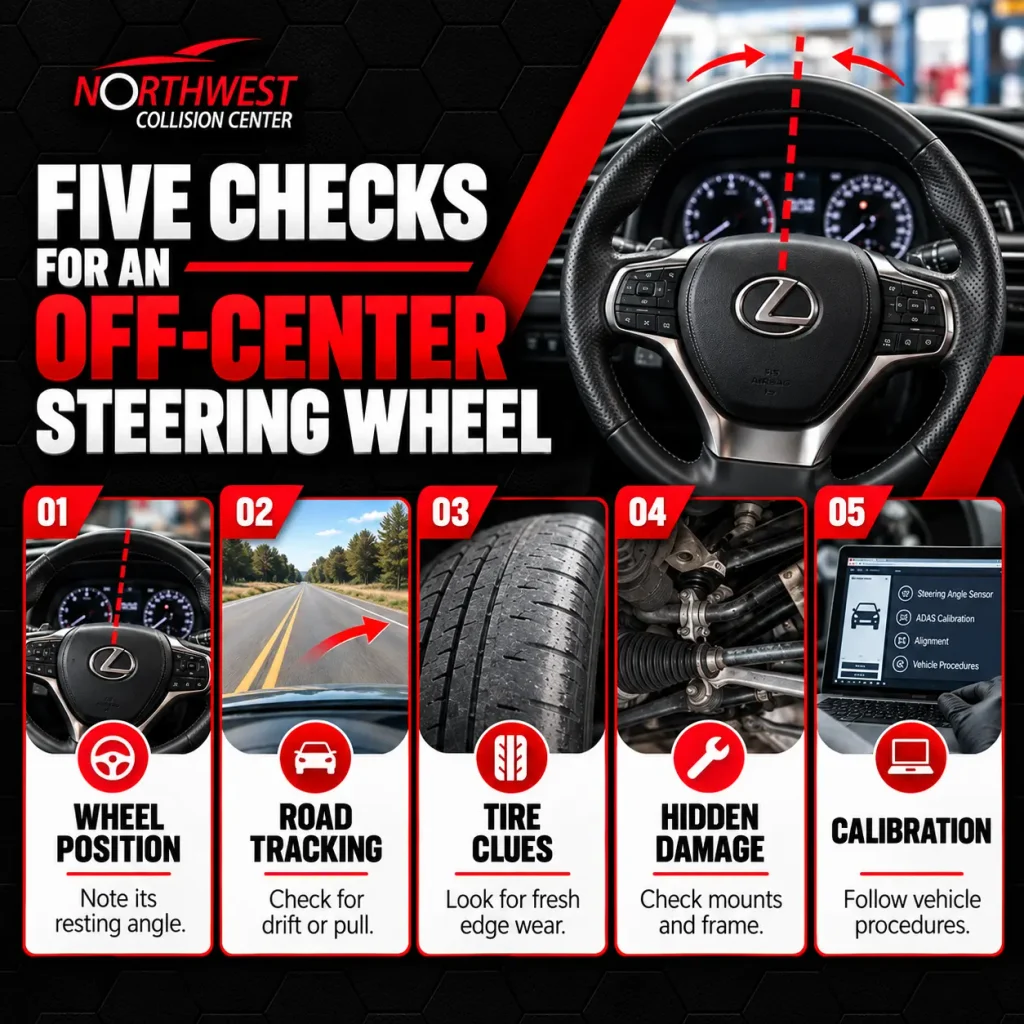
A steering wheel off-center after crash damage means the vehicle’s alignment, steering, suspension, or structure may have changed. The wheel can sit crooked while the car tracks straight, or it may appear with pulling or wandering. Both patterns deserve a collision-focused inspection.
Northwest Collision Center checks visible and hidden impact damage for St. Pete drivers. If structural points moved, frame straightening in St. Petersburg, FL may be part of the measured repair plan.
Why an Off-Center Steering Wheel Matters After a Crash
An off-center wheel is a clue, not a diagnosis. Comparing how the car tracks with how the wheel sits helps narrow the cause.
The Car Tracks Straight, but the Wheel Is Crooked
If the car holds a straight path but the wheel rests left or right, the front wheels may not match the rear thrust angle. The wheel may also have been positioned incorrectly during service. A proper post-collision wheel alignment should reference all four wheels and first confirm that the structure and suspension are sound.
The Wheel Is Crooked, and the Car Pulls
A crooked wheel with a steady pull may point to tire damage, a bent steering or suspension part, or structural movement. It may become more noticeable on I-275 or Tyrone Boulevard. Road crown can cause mild drift, but a new pull after impact is not normal.
What Could Have Changed During the Impact
Collision force can travel beyond visible panel or bumper damage. The inspection should cover tires, alignment angles, steering parts, suspension mounts, and vehicle structure.
Wheel Alignment and Thrust Angle
Toe, camber, caster, and rear thrust angle influence how the wheels track. A four-wheel measurement shows whether those angles meet specifications. A value that cannot be adjusted into range may signal a bent part or moved structure.
Steering and Suspension Parts
Tie rods, control arms, steering knuckles, struts, and mounting points can bend or shift during a crash. A technician should compare both sides and follow vehicle-specific inspection steps. Common frame damage steering symptoms overlap with suspension damage, so measurements matter.
Frame, Unibody, or Subframe Position
A shifted subframe or structural mounting point can change wheel position and alignment angles. Northwest Collision Center uses collision inspection and repair planning to identify what moved. Structure must be measured and corrected when needed before final alignment.
Steering Angle Sensors and Driver Assistance Systems
Many newer vehicles use a steering angle sensor for stability control and driver assistance systems. Calibration needs vary by model and repair. The shop’s Nissan collision repair in St. Petersburg, FL service includes collision-related alignment and safety checks for supported Nissan models.
What St. Pete Drivers Should Check Before Driving
Record changes that began after the crash and share them with the repair shop. Do not road-test a vehicle that may be unsafe.
Look for Visible Changes While Parked
With the wheels pointed straight ahead, note whether the steering wheel sits level. Check for a low tire, sidewall damage, a bent rim, rubbing, uneven fender gaps, leaks, or hanging parts. Photograph the wheel position and tire condition.
Pay Attention to New Handling Clues
If the vehicle has been judged drivable, notice pulling, wandering, vibration, new noises, or poor return-to-center during ordinary low-speed use. Avoid abrupt tests or highway driving. St. Petersburg rain reduces grip, while Pinellas County traffic leaves less room to correct an unexpected response.
Know When Not to Keep Driving
Stop driving and arrange a tow if the steering feels loose, binds, or changes suddenly. Do the same for tire damage, leaks, rubbing, or warning lights with unstable handling. The Florida Uniform Traffic Crash Manual describes damage that affects vehicle operation as functional damage.
How a Collision Shop Diagnoses an Off-Center Steering Wheel
A complete diagnosis connects the symptom to measurements. The shop should review the impact area, wheels, steering and suspension parts, structure, alignment readings, and vehicle procedures.
Damage Inspection and Vehicle Measurements
Technicians review the repair history, inspect the vehicle, and compare structural mounting points with specifications. If the symptom remains after prior work, a post-repair inspection in St. Petersburg can identify missed collision concerns. Findings guide part replacement, structural correction, or straightening.
Four-Wheel Alignment and Calibration Review
After damage is corrected, technicians measure all four wheels, center the steering wheel, and adjust permitted angles. Scan, steering angle reset, or driver assistance calibration needs depend on the model. Drivers seeking collision repair in St. Petersburg, FL, should ask how the shop will verify straight tracking and a centered wheel.
Takeaways
A crooked steering wheel after accident damage can come from alignment geometry, bent parts, shifted structure, or a calibration need. Have collision damage inspected before relying on a basic alignment. Measurements and vehicle-specific procedures show what changed and whether repairs corrected it.
Frequently Asked Questions
Can a Crash Make the Steering Wheel Sit Off-Center?
Yes, a crash can change wheel alignment or damage steering, suspension, or structural mounting points. The impact does not have to leave major visible body damage for the steering-wheel position to change.
Can the Steering Wheel Be Crooked Even if the Car Drives Straight?
Yes, the wheel can sit crooked while the car appears to track straight. The front wheels may be aligned incorrectly to the rear thrust angle, or the steering wheel may not have been centered during service.
Will a Wheel Alignment Fix an Off-Center Steering Wheel?
It may, but only if the structure and steering and suspension parts are undamaged. If a part is bent or a mounting point moved, that damage must be corrected before final alignment.
Is It Safe to Drive With an Off-Center Steering Wheel After a Crash?
Safety depends on the cause and the other symptoms. Do not keep driving if the vehicle pulls strongly, steering feels loose or binds, a tire is damaged, fluid leaks, or warning lights appear with poor handling.
Why Is the Steering Wheel Still Crooked After Collision Repairs?
The alignment may be incomplete, or hidden steering, suspension, subframe, or structural damage may remain. A post-repair inspection can compare the repair result with measurements and vehicle-specific procedures.
Get Post-Crash Steering Concerns Checked in St. Petersburg
If your steering wheel no longer sits centered after a crash, Northwest Collision Center can inspect alignment clues, steering and suspension parts, and possible structural movement.
Call (727) 347-8945 or visit 3301 Tyrone Blvd. N., St. Petersburg, FL 33710. You can also request an auto body repair estimate for a clear review of your post-crash concern.