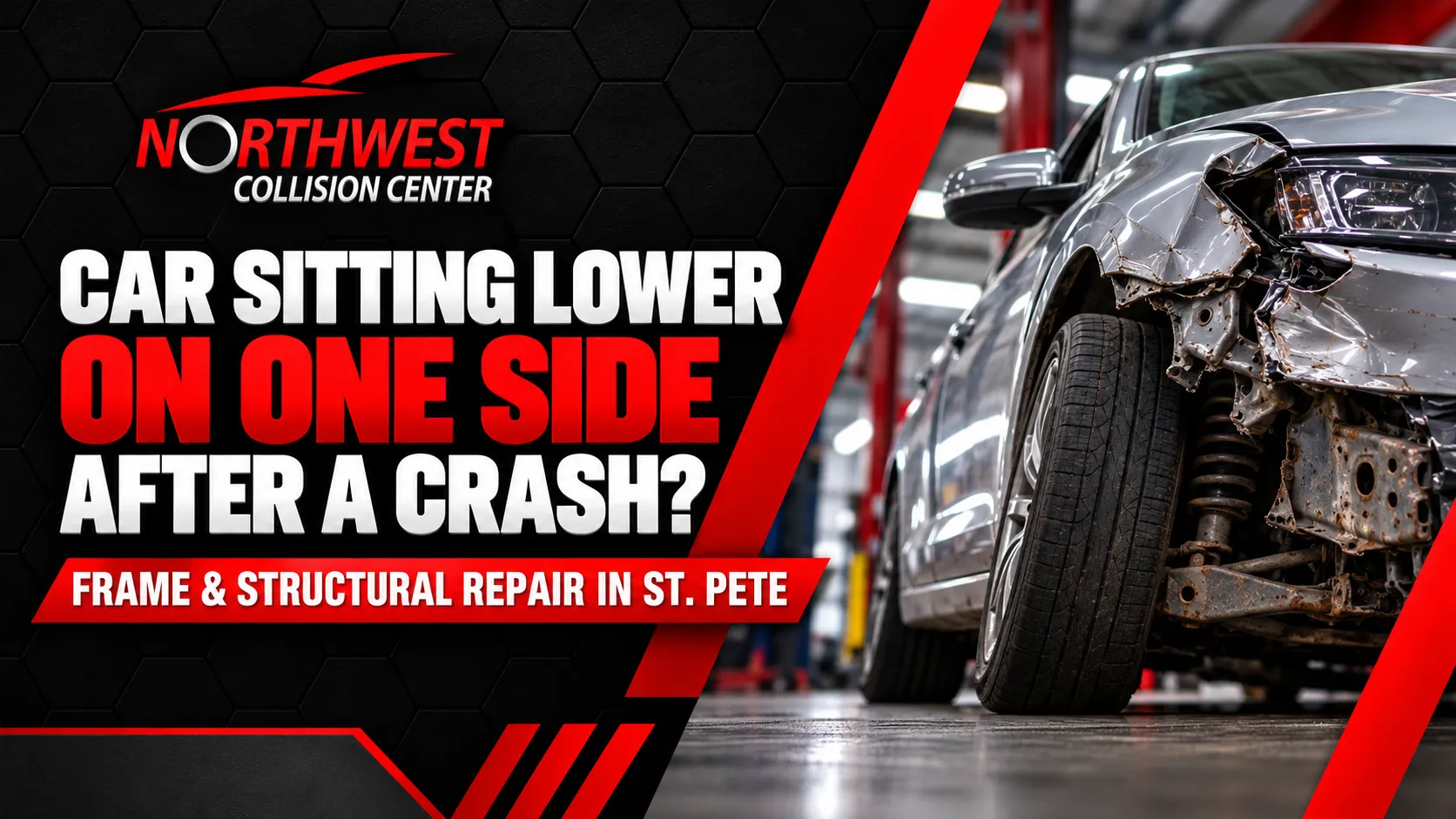
A car sitting lower on one side after a crash may have a bent suspension part, a shifted mounting point, or deeper structural damage. The lean can appear at one corner or along an entire side. Do not assume the issue is only cosmetic. A changed stance can affect tire clearance, alignment, and steering.
If the tire rubs, the wheel looks tilted, or the car feels unstable, arrange a tow. Northwest Collision Center uses computerized frame measuring and straightening to identify changes that a quick visual check may miss.
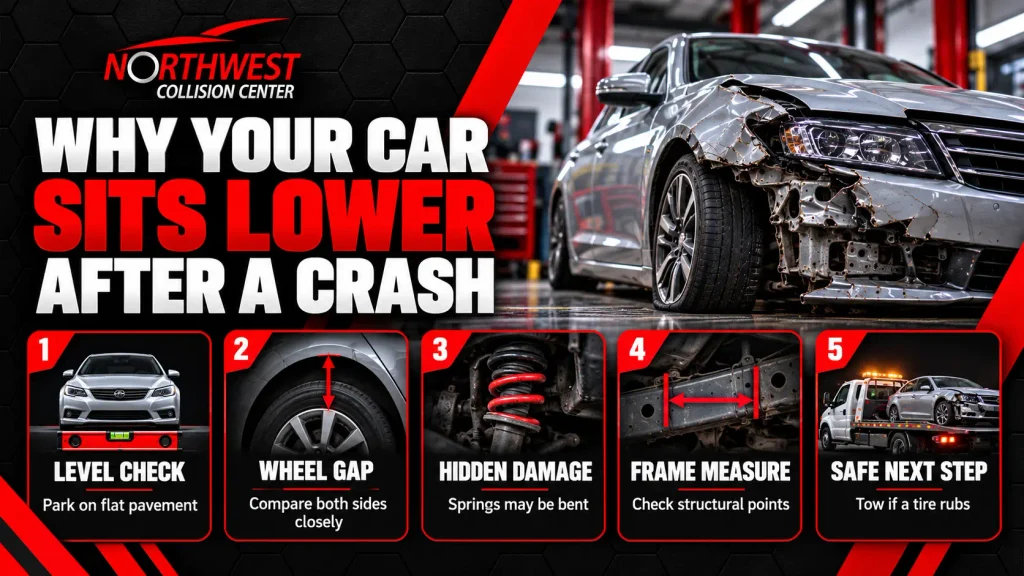
Why a Car May Sit Lower on One Side After a Crash
One side usually sits lower because the impact changed a component that supports that corner. The cause may be in the suspension, body structure, wheel, or tire.
Suspension Parts Can Bend or Shift
A damaged spring, strut, shock mount, control arm, knuckle, or subframe can reduce the space between the tire and fender. A spring can also move out of its seat without breaking. These faults may create uneven ride height after an accident, even when the outer body damage looks modest.
You may also notice clunks, pulling, a crooked steering wheel, or a wheel that no longer sits centered in its opening. These clues help trace the impact path.
Structural Points Can Move
Modern unibody vehicles rely on connected structural sections rather than a separate full frame. An impact can move a rail, apron, strut tower, rocker, floor section, or suspension mounting point. Structural damage after a collision may change both the vehicle’s height and the position of a wheel.
The correct repair depends on the model, materials, impact location, and factory procedures. Our Lexus collision repair work, for example, accounts for the brand’s model-specific structure and repair methods.
Tires, Wheels, and Cargo Can Affect the Stance
Not every uneven stance proves that the structure moved. Low tire pressure, a damaged tire, a bent wheel, uneven cargo, or sloped pavement can make one corner look low. A proper inspection rules out these simpler causes before structural conclusions are made.
How to Check Uneven Ride Height After an Accident
You can make a basic comparison at home, but do not crawl under a crash-damaged vehicle. Use a flat area away from traffic. A visual check cannot replace measurement.
Start on Level Ground
Remove heavy items from the cargo area, set all tires to the specified pressure, and point the wheels straight ahead. Compare the gap above matching tires from the same angle. You can also measure from the wheel center to the fender edge on both sides, which reduces the effect of tire size.
Take photos of each corner and note whether the difference appeared after the crash. If repairs were already completed, compare the stance with your pickup photos. Our related guide explains why a car pulling to one side after a crash can point to alignment, suspension, or structural issues.
Look for Other Collision Symptoms
Check for a tire touching the liner, fresh scrape marks, uneven panel gaps, or a door that needs extra force to close. Listen for clunks while steering at low speed. New warning lights, fluid leaks, or a wheel that appears pushed backward also call for prompt professional inspection.
When the Vehicle Should Not Be Driven
Do not drive if a tire rubs, a wheel is visibly tilted, the steering feels loose, fluid is leaking, or the vehicle cannot track steadily. The Florida Department of Highway Safety and Motor Vehicles’ crash manual defines disabling damage as damage severe enough to require towing from the scene. Its guidance on disabling crash damage supports arranging a tow when normal travel could cause more damage.
Sudden rain on I-275 or standing water on Pinellas County streets can make a handling problem harder to control. A short trip can also ruin a tire if damaged bodywork or suspension keeps rubbing it. If the stance changed after impact, caution is more useful than a road test.
How Structural Damage Is Measured and Repaired
Frame repair in St. Petersburg starts with finding every affected area, not pulling on the first part that looks bent. The repair team must connect visible damage with suspension position, body openings, and manufacturer measurements. Our collision and auto body repair process can address structural and exterior damage within one repair plan.
Inspection and Digital Measurement
Technicians first document the impact area, wheel position, panel fit, and visible suspension damage. A digital measuring system then compares key points with vehicle specifications. Measurements can show whether a mounting point moved up, down, inward, or rearward.
This step separates a bent replaceable part from a structural shift. It also helps prevent an alignment from being used to mask a problem that alignment adjustments cannot correct.
Repair Planning and Controlled Straightening
The plan may call for replacing suspension parts, repairing structural sections, or completing car frame straightening with controlled pulls. Technicians follow vehicle-maker procedures for joining methods and corrosion protection. Measurements keep corrections tied to specifications.
Final Checks Before Delivery
After repairs, the team rechecks structural dimensions, ride height, wheel position, panel fit, and alignment. A road test may confirm tracking, steering, noise, and vibration when the vehicle is safe to drive. Sensors or driver-assistance systems may also need diagnosis or calibration when the impact or repair changed their mounting positions.
Why St. Pete Conditions Make a Proper Repair Important
St. Petersburg driving can expose a weak repair quickly. Stop-and-go traffic on Tyrone Boulevard, sudden Gulf Coast rain, and trips toward the beaches all demand predictable steering and tire clearance. Heat and coastal humidity can also reach metal where collision damage disturbed coatings or seams.
A complete repair should address fit, measurement, refinishing, and corrosion protection. This helps prevent tire rubbing or added stress on nearby parts during daily Pinellas County driving.
Takeaways
A car sitting lower on one side after a crash may have a tire problem, bent spring, damaged suspension part, shifted subframe, or moved structural point. Check it on level ground, and watch for rubbing, leaks, poor steering, or a tilted wheel.
Do not rely on alignment alone to correct an uneven stance. Digital measurement and a model-specific repair plan can show what moved and whether parts need replacement, structural correction, or both.
Frequently Asked Questions
Can a minor crash make one side of my car sit lower?
Yes, a minor crash can bend a suspension part or move a spring from its seat. The visible body damage may look small even when force reached the wheel or its mounting points.
Does a lower corner always mean frame damage?
No, a lower corner does not always mean frame damage. Tire pressure, a damaged wheel, a broken spring, or another suspension fault can create the same appearance, so inspection and measurement are needed.
Can an alignment fix uneven ride height after a crash?
No, alignment alone does not restore ride height. It adjusts wheel angles, while a bent part or shifted mounting point must be repaired or replaced first.
How is hidden structural damage found?
Hidden structural damage is found through inspection and computerized measurement against vehicle specifications. Technicians also compare wheel position, panel gaps, suspension mounts, and the path of the crash force.
Will insurance cover frame or structural repair?
Coverage depends on your policy, the claim, and the insurer’s damage assessment. A documented estimate with measurements, photos, and required repair procedures can help explain why structural work is part of the collision repair.
Schedule Frame and Structural Repair in St. Pete
If your vehicle leans after a crash, Northwest Collision Center can inspect the suspension, measure the structure, and explain the repair options. Use our estimate request form or call (727) 347-8945 to arrange an evaluation.
Our shop is at 3301 Tyrone Blvd. N., St. Petersburg, FL 33710. If the tire rubs, the wheel is tilted, or the vehicle feels unstable, have it towed rather than driving it to our location.