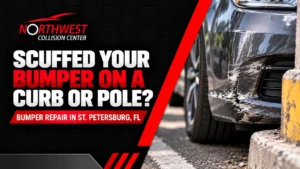
A bumper scuff from a curb or pole may be simple paint transfer, but it can also hide a gouge, cracked tab, or shifted sensor. If you need bumper repair in St. Petersburg, FL, start with a careful inspection instead of guessing from the mark alone.
Low-speed contact is common in downtown parking spaces, beach parking areas, and near concrete stops along Tyrone Boulevard. While some scuffs only affect the paint, others may involve damage beneath the bumper cover. The right repair depends on the scuff depth, bumper fit, and equipment mounted behind it.
At Northwest Collision Center, our auto restoration and body repair in St. Petersburg includes bumper repair, refinishing, and checks for damage behind the cover. These checks help determine what repairs are needed beyond the visible scuff.
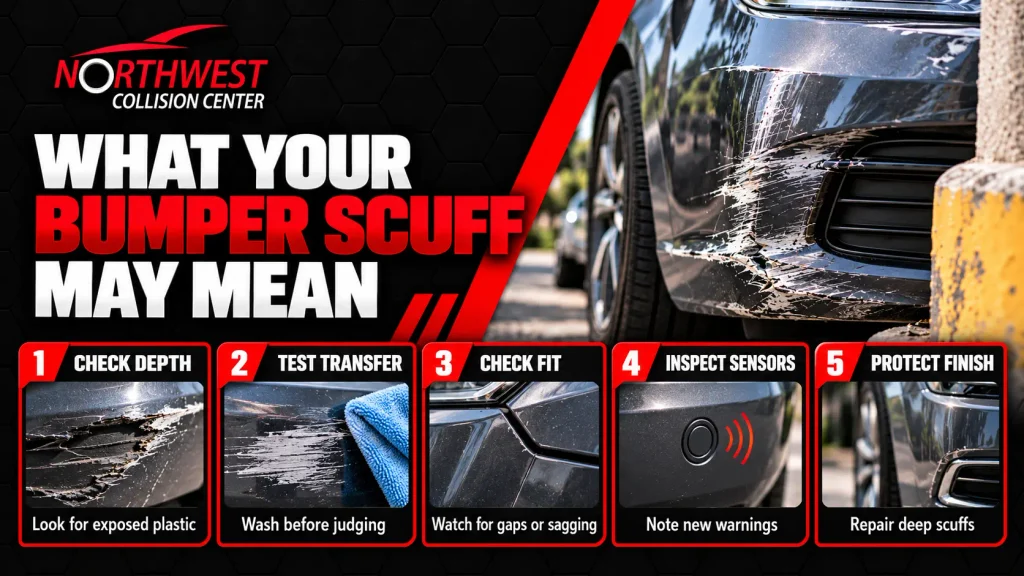
What a Bumper Scuff Can Mean
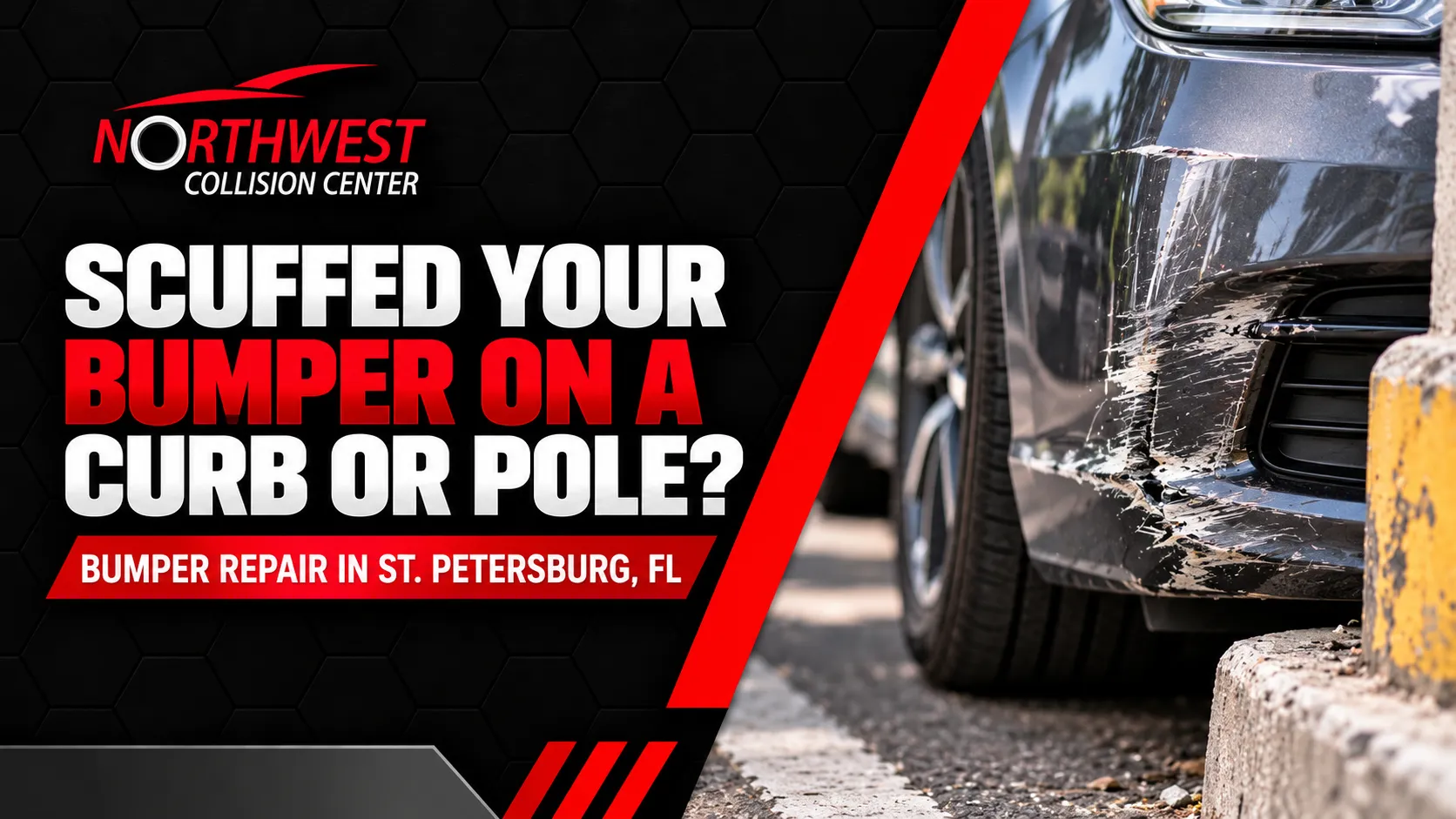
A bumper scuff can range from material sitting on top of the clear coat to torn plastic beneath the paint. Clean the area, then inspect it in good light before deciding what happened.
Surface Transfer or Clear-Coat Mark
Surface transfer often looks like a streak in the color of the curb, paint, or pole. The bumper may feel smooth, with the original color visible underneath. Some transfer comes off with cleaning, while a clear-coat mark may need polishing.
Avoid harsh solvents, rough pads, or aggressive rubbing compounds. They can dull the finish or turn a small mark into a larger refinishing job.
Paint Damage or Plastic Gouge
Paint damage is likely when the mark catches a fingernail, shows a different layer, or exposes black or gray plastic. A deep bumper scratch repair may require sanding, flexible filler, primer, color, and clear coat. The goal is to restore a smooth surface without leaving a weak edge that can peel later.
Color can be harder to match after years of Florida sun. Our digital color matching for auto paint accounts for the finish currently on the vehicle, not only the original factory code.
Damage Behind the Cover
Hidden damage is possible when the contact pushed the bumper inward or pulled a corner away from the body. Clips, retainers, brackets, absorbers, wiring, and parking sensors may sit behind the cover. A bumper can spring back despite a broken mount.
If you see cracks, wide panel gaps, or a loose edge, compare the repair choices carefully. Our guide to bumper repair and replacement options explains how the condition of the cover and its mounting points affects the decision.
When to Get Bumper Repair in St. Petersburg, FL
Schedule an inspection when the damage goes through the paint, changes the bumper’s fit, or affects a nearby sensor. A small-looking contact can need more than cosmetic bumper scuff repair if the cover no longer sits securely.
Signs It Is More Than Cosmetic
Look for a corner that pops out, a gap near the fender or headlight, plastic rubbing a tire, or a lower shield hanging down. New parking-sensor alerts, camera faults, or warning lights also deserve attention. Stop driving if the bumper is dragging, loose enough to detach, or interfering with a tire.
Modern vehicles often place sensors and wiring close to the bumper cover. These components may require vehicle-specific care after an impact. For example, our shop provides Honda auto body repair in St. Petersburg, including work on bumper covers, body panels, structural parts, and safety systems.
Why Coastal Conditions Matter
St. Petersburg’s sun, humidity, heavy rain, and Gulf air can be hard on damaged finishes. Plastic does not rust, but exposed metal fasteners or nearby body panels can corrode. Sun and heat can also make an unsealed paint edge easier to notice as the finish ages.
Prompt car bumper paint repair helps seal the damaged surface and keeps moisture, dirt, and road film from working into the edge. This matters for vehicles parked outside near the beaches or driven often through summer storms.
How Professional Bumper Scuff Repair Works
Professional bumper scuff repair starts with finding the full extent of the damage, then choosing a method that fits the bumper material and finish. The process may stay local to the damaged area or require removing the cover for access.
Inspection and Repair Planning
A technician checks the scuff depth, bumper shape, panel gaps, mounting points, and nearby electronics. If removal reveals a broken bracket or torn tab, the estimate can be updated before work continues.
Surface Repair and Refinishing
The repair area is cleaned and sanded to remove damaged coatings and create a stable edge. Gouges may be filled with a flexible repair material, then shaped to match the bumper. Primer, matched color, and clear coat rebuild the finish before final polishing.
A scratched bumper repair is not the same as covering the mark with touch-up paint. Good preparation helps the new coating bond, while controlled refinishing keeps the repaired area smooth and consistent.
Reassembly and Final Checks
After refinishing, the bumper is reattached with the correct clips, retainers, and hardware. The technician checks gaps, lower shields, lights, and any sensors in the repair area. The final review confirms that the cover is secure and the finish looks consistent under different lighting.
What to Do Right After a Curb or Pole Scuff
After a curb or pole scuff, park safely, photograph the damage, and check whether the bumper is loose or touching a tire. Note any warning messages before turning the vehicle off. Do not pull hard on the cover or use glue, heat, or household chemicals.
If another vehicle or someone else’s property was involved, document the scene and exchange the required information. Florida drivers can review the official Driver Report of Traffic Crash instructions when a crash does not require a law-enforcement report. Your insurer can explain whether the repair cost and deductible make a claim practical.
Takeaways
A curb or pole mark can be surface transfer, clear-coat damage, missing paint, a plastic gouge, or a sign that the bumper shifted. Clean gently, inspect the fit, and watch for cracks, loose corners, rubbing, or sensor warnings.
Professional bumper repair in St. Petersburg, FL, can address both the visible finish and the parts behind the cover. An inspection gives you a repair plan based on the actual damage, not only the size of the scuff.
Frequently Asked Questions
Can a bumper scuff be buffed out?
Yes, a bumper scuff can sometimes be buffed out if it involves light clear-coat marks or surface paint transfer. These marks may be polished after proper cleaning. However, deeper scratches that catch a fingernail, expose another layer, or cut into plastic usually require repair and refinishing.
How do I know if a bumper scuff is only paint transfer?
Paint transfer often sits on top of the finish and may feel smoother than a true scratch. Clean a small area gently, and stop if the original paint looks thin, dull, or damaged beneath the mark.
Can a scratched plastic bumper rust?
No, the plastic bumper cover itself cannot rust. Nearby metal brackets, fasteners, or body panels can corrode if impact damage exposes them to moisture and coastal air.
Should I file an insurance claim for a bumper scuff?
You should consider filing an insurance claim for a bumper scuff based on the repair estimate, your deductible, and the circumstances of the damage. Whether another party or property was involved may also affect the decision. Document the damage first, then compare the repair estimate with your policy terms or ask your insurer for guidance.
How long does bumper scuff repair take?
Bumper scuff repair time varies depending on the damage and the repairs needed. Scuff depth, the paint system, required parts, and hidden damage discovered during disassembly can affect the schedule. A repair shop can provide a clearer timeframe after inspecting the bumper and confirming the repair plan.
Schedule Bumper Scuff Repair With Northwest Collision Center
Northwest Collision Center can inspect a curb or pole scuff, explain whether the damage is cosmetic, and prepare a repair estimate. For bumper repair in St. Petersburg, FL, contact our shop at (727) 347-8945 or visit 3301 Tyrone Blvd. N., St. Petersburg, FL 33710. We will review the visible mark, bumper fit, and nearby components so you can choose the next step with clear information.